
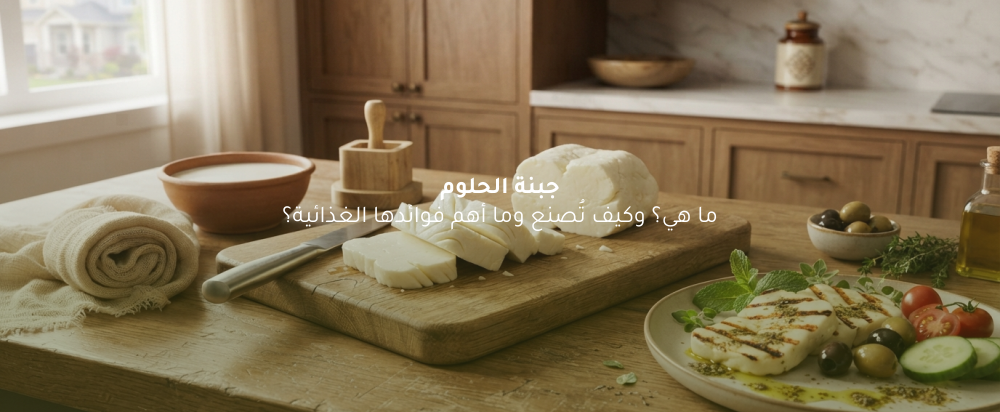
Halloumi cheese is one of the most popular cheeses, known for its firm texture and ability to withstand heat without melting easily. This makes it a popular choice for grilling, roasting, and preparing sandwiches and salads. The combination of a slightly salty taste and a supple texture has made it a staple in many Arab and Mediterranean cuisines.
Its fame isn't limited to its taste; it also stems from its unique manufacturing process, which differs from many other cheeses, as well as its protein, calcium, and other important nutrients. However, its nutritional value varies from product to product depending on the type of milk, fat and salt content, and the manufacturing method.
What is halloumi cheese?
Halloumi cheese is a type of semi-hard cheese traditionally made from milk, and sheep, goat, cow, or a mixture of these may be used in its production depending on the product and method of manufacture.
Halloumi is known for its firm texture and ability to maintain its shape when exposed to heat, so it can be grilled or fried directly without turning into a liquid like some other types of cheese.
It also has a relatively salty taste, and may be preserved in a brine solution that helps to preserve it and gives it its well-known flavor.
Why is halloumi cheese called by this name?
The name Halloumi is linked to the history of this type of cheese and its spread in the eastern Mediterranean region, and especially Cyprus, where Halloumi has become one of the most famous traditional food products.
Over time, the name spread to Arab countries and many global markets, and the word "Halloumi" came to refer to this type of cheese known for its firm texture and suitability for grilling.
Modern manufacturing methods may differ from traditional recipes, but the basic properties of cheese remain largely the same.
How is halloumi cheese made?
Cheese making goes through several stages, and the exact details may vary depending on the factory or the recipe used.
heating milk
The manufacturing process begins by preparing the milk and raising it to a suitable temperature that helps to start the cheese-making process.
Adding rennet
Rennet is added to help the milk coagulate and form a mass of cheese.
Cutting the curd
After the milk has set, the curd is cut into small pieces to help separate the whey.
Cheese straining
The whey is separated from the curd, then pressed or shaped to achieve the desired consistency.
cooking or heating
One of the distinctive stages in the production of halloumi is reheating the cheese pieces, which is one of the reasons that helps them acquire a firm texture and resist melting when grilling.
Salting and preservation
The cheese is then salted, and may be kept in a brine solution until it is ready for consumption.
Methods for preparing halloumi cheese
One of the main reasons for its popularity is its ease of use in various recipes.
Grilled halloumi
The cheese can be cut into medium-thick slices and placed on the grill or in the pan until it acquires a golden color on the outside.
red halloumi
The slices can be browned in a non-stick pan to achieve a crispy exterior and relatively soft interior.
Halloumi with salad
Grilled halloumi pieces can be added to salads with fresh vegetables for a meal that combines protein and vegetables.
Halloumi sandwich
Halloumi can be used with bread, vegetables, tomatoes, or herbs to prepare a quick meal.
Halloumi for breakfast
Halloumi cheese goes well with eggs, vegetables and bread, so it is a popular choice for breakfast or brunch.
Is halloumi cheese healthy?
It can be part of a balanced diet when consumed in appropriate amounts.
It typically contains:
- Protein.
- Calcium.
- Fats.
- Phosphorus.
- Some vitamins and minerals are found in dairy products.
However, halloumi may also contain high levels of sodium and fat, especially in full-fat or extra-salted varieties.
Therefore, whether it is suitable for a diet depends on the portion size, frequency of consumption, and the other components of the meal.
Those monitoring their sodium intake can compare food labels and choose lower salt content when available.
What is the nutritional value of halloumi cheese?
Nutritional value varies between brands and types of milk used, therefore there are no uniform figures that apply to all products.
However, it is known to be a good source of protein and calcium, and it also contains fats that increase its calorific density.
When buying halloumi, it is important to read the nutrition label and pay attention to:
- Calories per serving.
- Protein content.
- Total and saturated fats.
- Sodium.
- Calcium.
This information helps in choosing the appropriate type and quantity for the diet.
Is halloumi cheese beneficial for pregnant women?
Pregnant women can eat halloumi if it is made from pasteurized milk and has been stored and prepared in a safe manner.
Halloumi cheese provides some important elements such as protein and calcium, which are elements the body needs during pregnancy.
However, attention should be paid to the sodium and fat content, especially if there are special dietary recommendations from the doctor.
It is also advisable to always check the packaging to ensure that the milk used in manufacturing is pasteurized, and to follow the instructions of a doctor or nutritionist if there is a special health condition.
Is halloumi suitable for dieting?
Halloumi can be included in a weight control diet, but moderation in quantity is important due to the high calorie and fat content of some varieties.
Some ways to help make a meal more balanced include:
- Eat a moderate amount of cheese.
- Serve it with a large quantity of vegetables.
- Using grilling instead of frying in a large amount of fat.
- Choose wholemeal bread when preparing sandwiches.
- Compare the types and choose products with less fat or sodium when available.
This allows you to enjoy the taste of cheese without the meal being excessively high in calories.
What is the difference between halloumi and mozzarella?
Halloumi differs significantly from mozzarella in texture and method of use.
Halloumi is firmer and can withstand high temperatures without melting easily, while mozzarella is characterized by a high melting and expanding ability when heated.
Therefore, mozzarella is used extensively in pizzas and baked goods, while halloumi is used in grilling, roasting, and salads.
The taste also differs; halloumi is usually saltier, while mozzarella is milder in flavor.
How to choose good halloumi cheese?
When buying halloumi cheese , it is best to pay attention to several factors:
- Read the list of ingredients.
- Check the production and expiry dates.
- Knowing the type of milk used.
- Review the fat and salt ratio.
- Check the integrity of the packaging.
- Store the product at the recommended temperature.
It is preferable to choose products from a reliable source that cares about the quality of the milk, the method of manufacturing and preservation.
How should halloumi cheese be stored after opening?
The product instructions should be followed first, as the storage method may vary between types.
Generally, halloumi is kept in the refrigerator in a tightly sealed container, and if it is kept in its brine solution, it is preferable not to throw it away unless the product instructions indicate otherwise.
Clean utensils should be used when handling cheese, and the package should not be left outside the refrigerator for long periods, while adhering to the consumption period after opening written on the product.
Enjoy the delicious taste of halloumi cheese from Khayrat Laziza
Halloumi cheese is distinguished by its unique flavor and texture, making it suitable for grilling, breakfast, salads, and many everyday recipes. With careful selection, proper storage, and when consumed as part of a balanced meal, it can be a delicious and versatile addition to your table.
You can find out about the dairy and cheese products available at Delicious options and a choice of what suits your needs and daily recipes.